SEAP Project Ichnology Workshop integrates ichnological and high-resolution geochemical data
21 May 2026
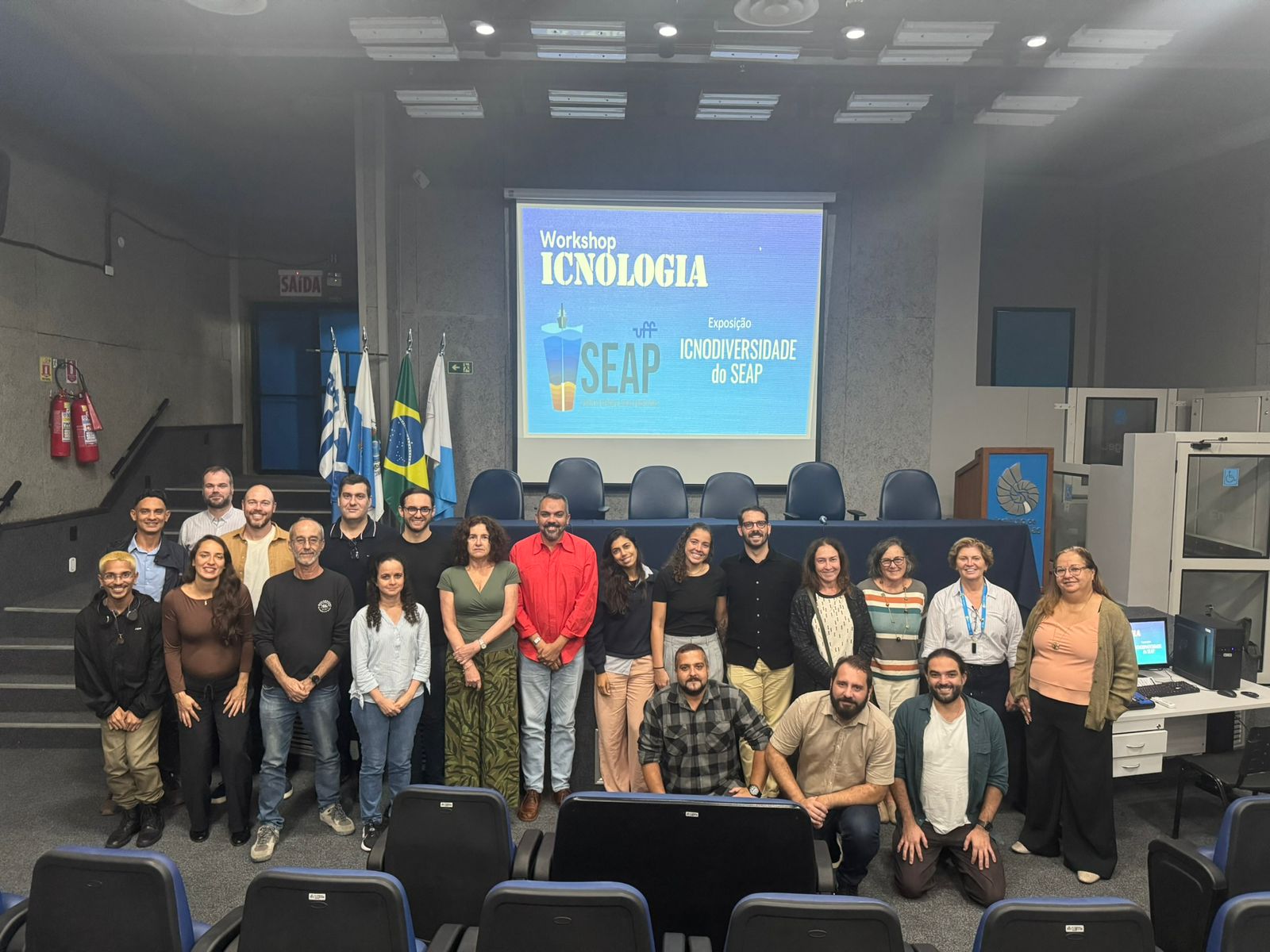
On May 20, 2026, Universidade Federal Fluminense hosted the SEAP Project Ichnology Workshop, funded by Petrobras, bringing together researchers, graduate students, and specialists focused on biological activity records preserved in sedimentary sequences.
The event marked an important step in the scientific agenda connected to the SEAP Project and to LAM+ activities. For the first time within the project, ichnological data were systematically compared with high-resolution geochemical records obtained by XRF, opening a new interpretative perspective for deposits from the Sergipe-Alagoas Basin.
Integrating the Bioturbation Index with redox-sensitive elements such as manganese allows high-resolution reconstruction of substrate oxygenation conditions during deposition, providing a valuable window into the paleoceanographic dynamics of continental margins.
What was discussed
The workshop covered core ichnology concepts and methods, including ichnofossil and ichnofacies identification, with a focus on ichnodiversity recorded in the Sergipe-Alagoas Basin. The central discussion addressed how ichnological criteria can support paleoenvironmental interpretation, especially when articulated with high-resolution geochemical data.
The case study presented showed how variations in the Bioturbation Index (BI) along a sediment core about 60 meters deep are systematically correlated with fluctuations in manganese content, represented as ln Mn. This element is sensitive to depositional redox conditions and helps interpret bottom-water oxygenation during sediment deposition.
Intervals with stronger bioturbation tend to coincide with more oxygenated conditions and, therefore, with relatively higher Mn concentrations. Conversely, laminated intervals may indicate bottom-water anoxia or hypoxia, where benthic activity was reduced or limited.
LAM+ contribution
LAM+ has hyperspectral imaging infrastructure in the VNIR and SWIR ranges, in addition to XRF core-scanning capability, enabling continuous and non-destructive analyses of sediment cores. This instrumental capacity places the laboratory in a strategic position to conduct integrative studies combining sedimentological, ichnological, and geochemical data.
This approach is still emerging in Brazil, but has strong potential for advancing paleoclimate and paleoceanographic understanding in the South Atlantic, especially for studies focused on reconstructing depositional conditions, redox variability, productivity, bottom-water oxygenation, and continental-margin dynamics.
The interface between ichnology and elemental geochemistry, consolidated in this workshop as a new interpretative front for the SEAP Project, is only a starting point. LAM+ is developing protocols for systematic integration of these data sources in paleoenvironmental reconstruction studies, with applications in both basic research and industry-relevant contexts.